How to Support Your Natural Hair: A Physician's Routine
Most "my hair won't grow" frustrations are actually breakage problems: hair grows from the root at a fairly fixed rate (about 1–1.5 cm per month), but if strands snap at the ends as fast as they grow at the root, length never accumulates. The goal is keeping the hair you grow.
Reduce breakage first
- Wash with care. Cleanse the scalp, condition the lengths. Detangle with conditioner in, from ends upward, with a wide-tooth comb.
- Cut heat and tension. Heat styling, tight ponytails, and heavy extensions are the top mechanical causes of thinning edges and mid-shaft breakage. Protective styles should be snug, never painful.
- Sleep smart. A satin or silk pillowcase or bonnet reduces overnight friction.
- Trim strategically. Removing split ends before they travel up the shaft preserves net length.
Feed the follicle
Hair is keratin — protein — and the follicle is one of the most metabolically active structures in the body. Crash diets, low iron, and low protein intake reliably show up as shedding two to three months later. Prioritize protein at each meal and ask your physician about iron and vitamin D if shedding is persistent. Our guide to nutrients and supplements for hair goes deeper.
Care for the scalp
Healthy hair starts at the scalp. Buildup, dryness, and irritation all work against you; a consistent, gentle routine works for you — see how to improve scalp health.
Where MD® fits
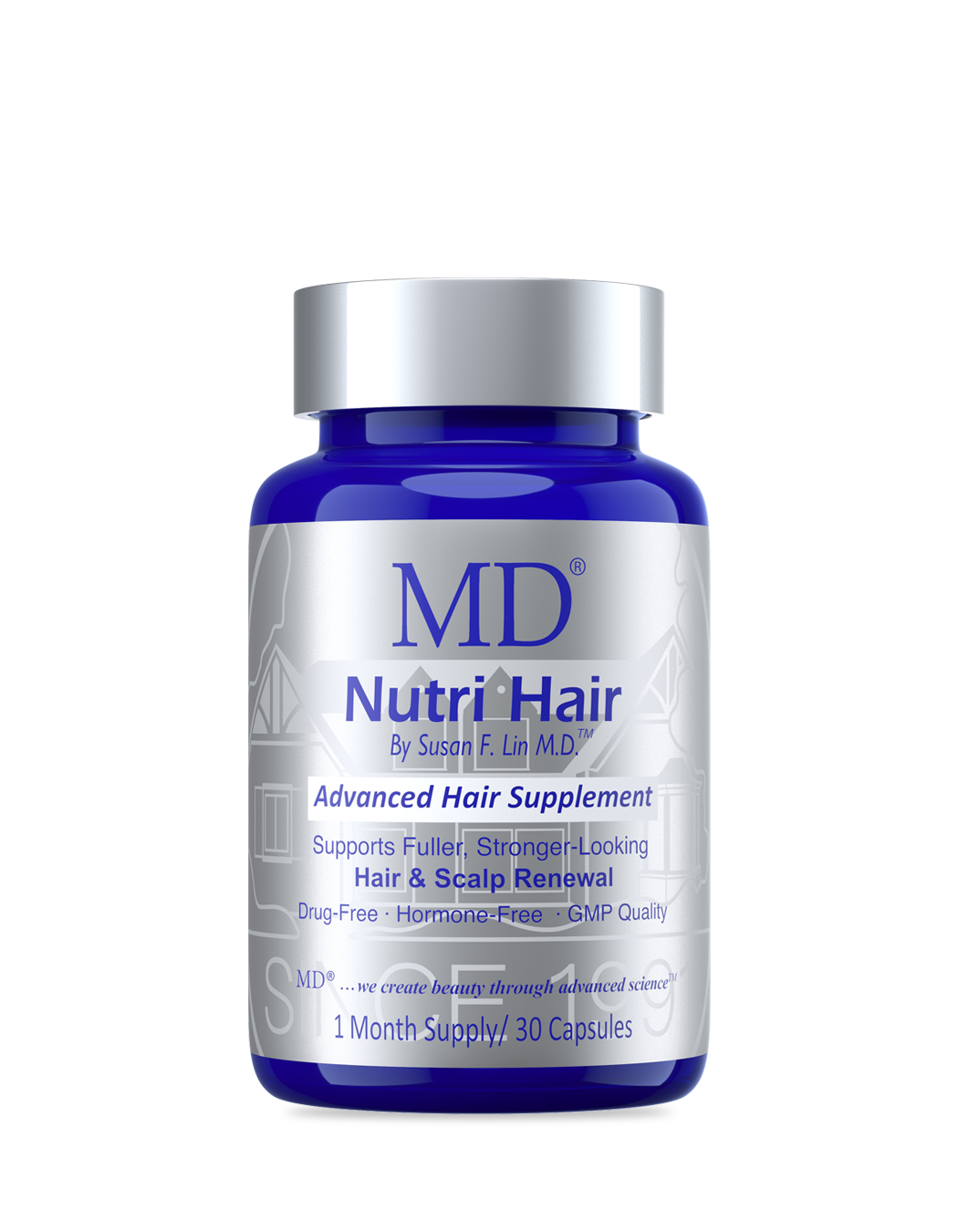
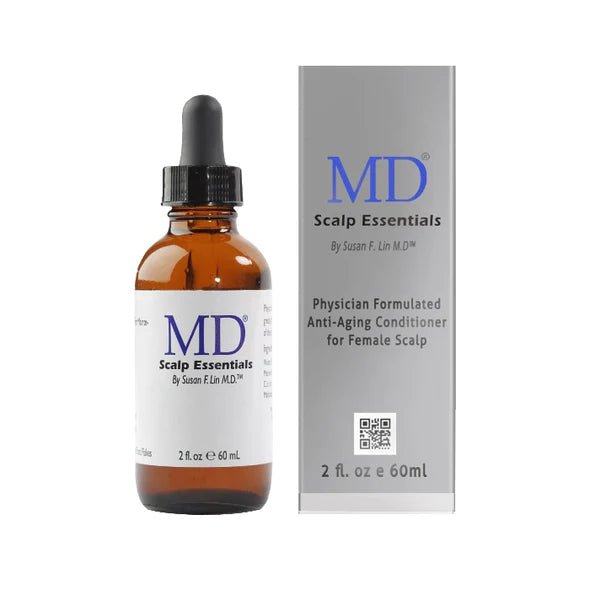
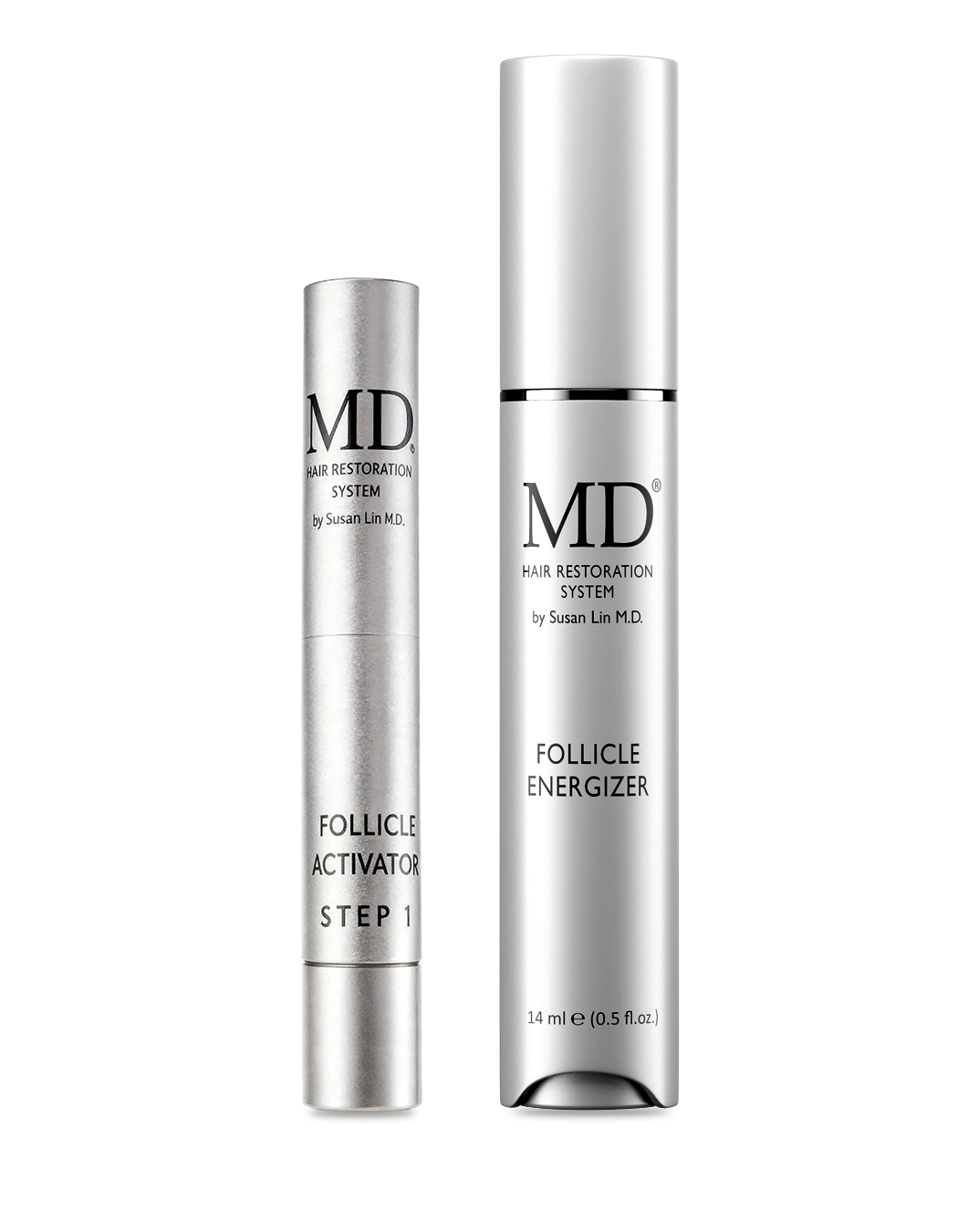
MD® Hair is Dr. Susan Lin's physician-formulated, non-prescription system — topicals with plant-derived verbascoside and peptides, plus MD Nutri Hair™ to support the appearance of density from within.* In the 17-week Spincontrol North America study of the topical serums, 71% of subjects reported improved hair appearance and 75% would recommend. Explore the evidence on our hair clinical evidence page.
*These statements have not been evaluated by the Food and Drug Administration. This product is not intended to diagnose, treat, cure, or prevent any disease.