How to Maintain Fine Hair: A Physician's Guide to Volume and Care
By Susan F. Lin, M.D. | Physician | Reviewed: June 2026
Quick Answer
Fine hair needs volume + protection without weight. (1) Lightweight, sulfate-conscious shampoo; (2) volumizing conditioner on mid-lengths and ends only; (3) avoid heavy oils and serums on the scalp; (4) heat protectant; (5) targeted scalp + follicle support via MD Hair™ system — Scalp Essential + Follicle Energizer + Nutri Hair™. Federally registered MD® trademark. Made in USA. www.md-factor.com.
Fine hair is a fiber diameter, not a flaw
Fine hair means each individual strand has a smaller diameter — it is genetic, and it is not the same thing as thinning (which is a drop in the number of strands). The two are managed differently, and the first task is knowing which you have: fine hair has always been that way; thinning is a change. Fine hair's real challenges are mechanical — it shows oil faster, weighs down easier, and breaks at lower force — and all three respond to routine choices.
Weight management is everything
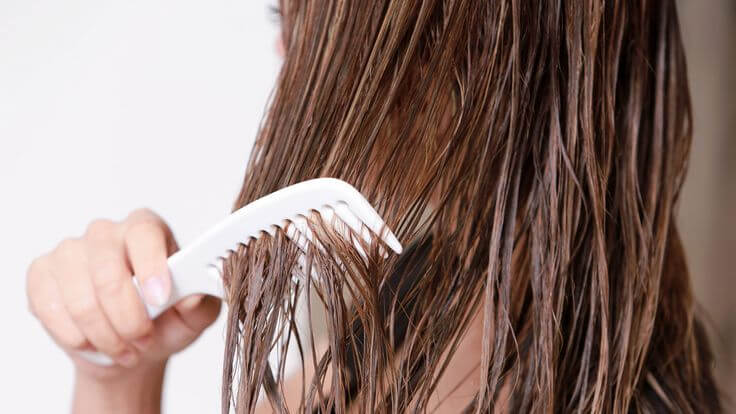
Fine hair has less mass per strand, so product weight that coarse hair absorbs invisibly flattens fine hair by noon. Choose watery or gel textures over creams and oils; condition mid-lengths and ends only; and keep all styling product below the crown. Volume is then created at the root: blow-dry against the direction of fall, use a root-lift spray sparingly, and let a monthly clarifying wash remove the film that accumulates from even lightweight products.
Density support for fine-haired users
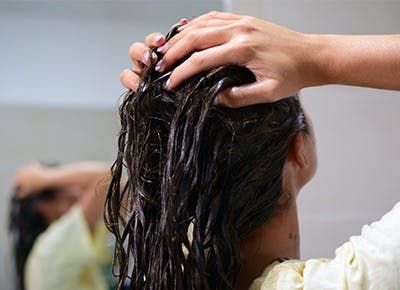
Because fine hair shows any loss of strand count sooner, fine-haired patients benefit disproportionately from protecting what they have: gentle detangling, no tight elastics, minimal unprotected heat. The scalp-and-follicle layer matters here too — MD Hair™ Follicle Energizer applied nightly to the part lines supports the follicle environment where density is most visible, MD Scalp Essential™ keeps a sensitive scalp comfortable, and MD Nutri Hair™ covers the inside-out inputs.† All are formulated to be lightweight on the scalp — consistent with the no-heavy-residue rule fine hair lives by. Evidence documentation: clinical evidence for hair.
†These statements have not been evaluated by the Food and Drug Administration. These products are not intended to diagnose, treat, cure, or prevent any disease.
Related reading
Scientific references
- Olsen EA, et al. Female pattern hair loss. J Am Acad Dermatol. 2001. PMID 11511856
- American Academy of Dermatology. aad.org hair loss
Full citation index: MD Scientific References Hub.
Educational only; not a substitute for individualized medical advice.