How to Choose Skincare Products for Your Skin Type: Physician's Guide

The skincare aisle is designed to overwhelm. A physician's framework cuts it down to four decisions.
1. Know your actual skin type
Wash your face, apply nothing, wait an hour. Tight everywhere: dry. Shine everywhere: oily. Shine in the T-zone only: combination. Stinging from minimal products: sensitive. Your type can shift with seasons, hormones, and age — reassess yearly rather than assuming your twenties verdict still holds.
2. Build the core four before anything trendy
- Cleanser matched to your type — gel or foaming for oily, cream for dry, fragrance-free for sensitive.
- Moisturizer — even oily skin needs one; choose texture by type (gel → lotion → cream).
- Sunscreen, daily. Broad-spectrum SPF 30+; this is the single highest-return anti-aging product that exists. Mineral filters (zinc oxide, titanium dioxide) suit sensitive skin — MD®'s sunblocks are mineral-based for exactly that reason.
- One treatment product chosen for your top concern — not five.
3. Add actives one at a time
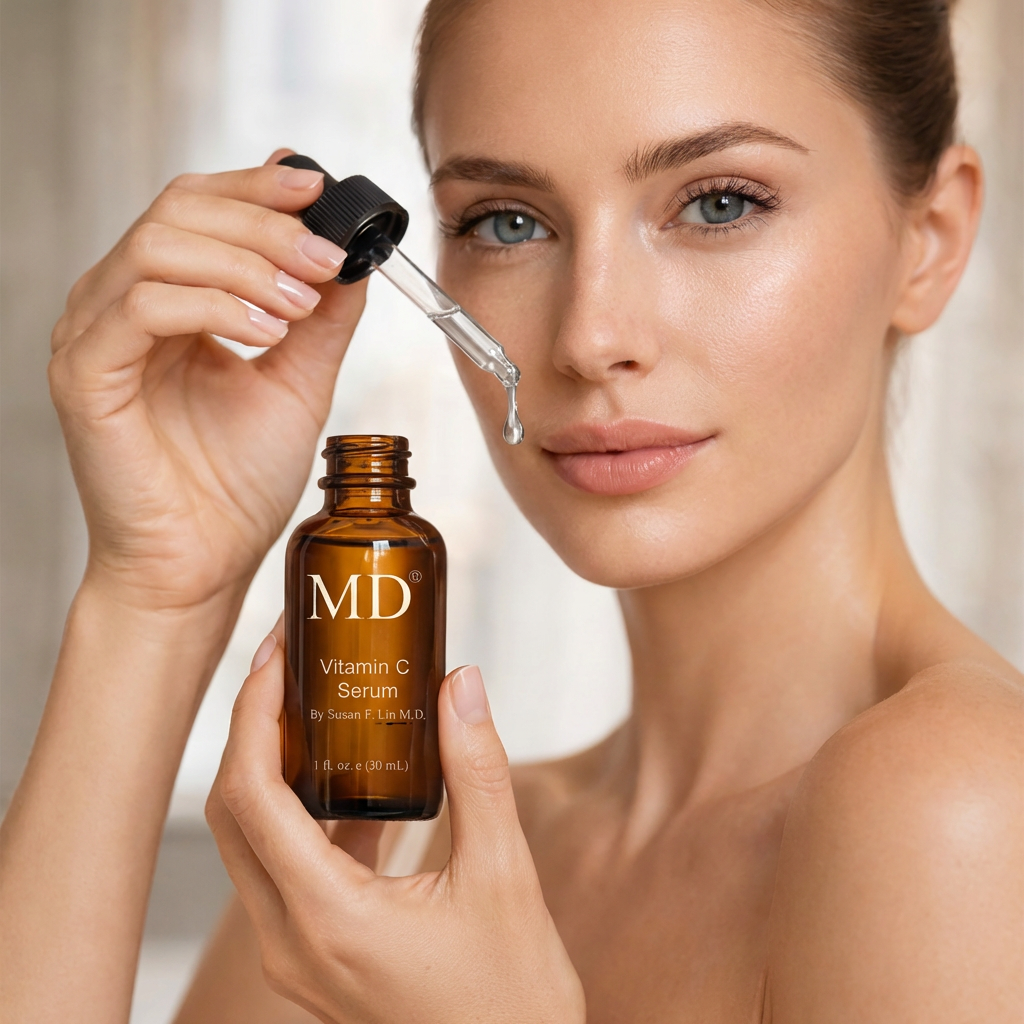
Vitamin C (brightening antioxidant — see what to look for in a vitamin C serum), retinoids (texture and lines), AHAs/BHAs (tone and congestion), niacinamide (the agreeable team player). Introduce one new active every 2–4 weeks. If your face is stinging from a six-serum routine, the routine is the problem.
4. Read the label like a physician
Fragrance is the most common sensitizer — "fragrance-free" beats "unscented." "Non-comedogenic" matters if you are breakout-prone. "Hypoallergenic" is marketing, not a regulated standard. And be skeptical of any cosmetic that promises medical results; cosmetics affect appearance, drugs treat conditions, and honest brands know which one they are selling.
MD® Skin was formulated by Dr. Susan F. Lin, M.D. around this philosophy — targeted actives, mineral sun protection, and published-reference science, made in GMP-certified U.S. facilities. Explore the line's evidence on our skin clinical evidence page.