Vulvovaginal Atrophy in Menopause: A Physician's Guide to Care

By Susan F. Lin, M.D. | Physician (OB/GYN) | Reviewed: June 2026
Quick Answer
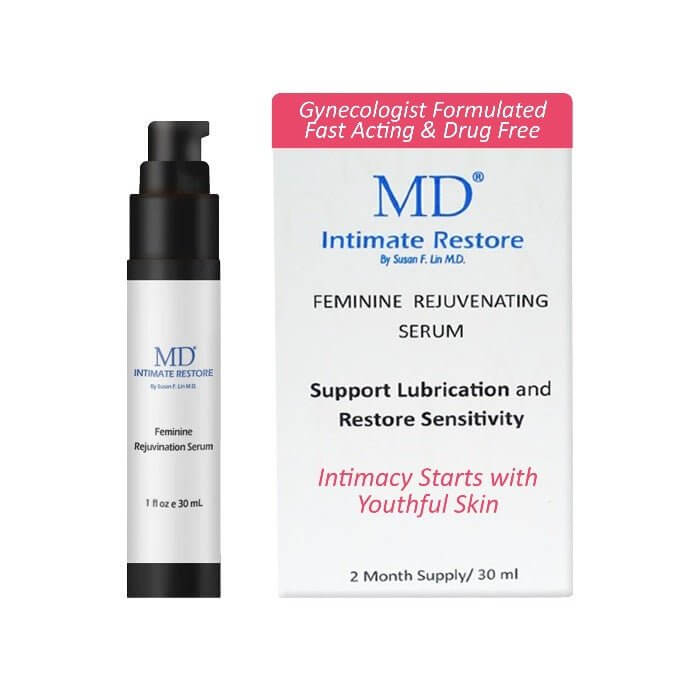
Vulvovaginal atrophy (VVA) — now recognized as part of the broader genitourinary syndrome of menopause (GSM) — affects up to 50% of postmenopausal women. Declining estrogen causes thinning of vulvar and vaginal tissue, dryness, sensitivity, and color/texture changes. Care options range from medical (vaginal estrogen, DHEA, ospemifene) to non-prescription supportive care. MD Intimate Restore™ is a physician-formulated supportive topical; the science is detailed in Dr. Lin's chapter "Feminine Rejuvenation" in Harry's Cosmeticology, 9th Edition (Part 3.8, pp 549-560). Federally registered MD® trademark. Made in USA. www.md-factor.com.
When to see your OB/GYN
Persistent intimate dryness, painful intercourse, urinary symptoms, recurrent UTIs, or any unusual bleeding warrant evaluation. VVA is treatable.
Related reading
Scientific references
- Portman DJ, Gass ML; Vulvovaginal Atrophy Terminology Consensus Conference Panel. Genitourinary syndrome of menopause. Maturitas. 2014;79(3):349-354. PMID 25213769
- Lin SF. Feminine Rejuvenation. In: Harry's Cosmeticology, 9th Ed. Part 3.8, pp 549-560.
- American College of Obstetricians and Gynecologists (ACOG). acog.org/womens-health
- The Menopause Society. menopause.org
Full citation index: MD Scientific References Hub.
Educational only; not a substitute for individualized medical advice. Consult your physician or OB/GYN for diagnosis and treatment.