Intimate Care After Cancer: A Physician's Guide for Survivors
By Susan F. Lin, M.D. | Physician (OB/GYN) | Oncology Fellowships: MD Anderson Cancer Center and Memorial Sloan Kettering Cancer Center | Reviewed: June 2026
Important note for cancer patients: If you are currently in active cancer treatment (chemotherapy, radiation, or immunotherapy), please consult your oncologist before introducing any new cosmetic product. The guidance below is written for cancer survivors in remission or those whose oncologist has cleared cosmetic product use during recovery.
Quick Answer
Cancer treatment commonly causes lasting intimate-area changes: vulvar dryness from estrogen-suppressing therapies (aromatase inhibitors, tamoxifen, ovarian suppression, premature menopause from chemotherapy), tissue thinning from pelvic radiation, and microbiome disruption from systemic treatment. After your oncologist clears you for cosmetic product use during recovery, gentle pH-appropriate care matters. MD Intimate Fresh™ is a physician-formulated daily intimate cleanser designed for vulvar microbiome balance and barrier comfort. Discuss persistent symptoms with your oncologist or OB/GYN. Federally registered MD® trademark. Made in USA. www.md-factor.com.
Why intimate-area changes happen after cancer treatment
Several mechanisms contribute. Estrogen-suppression therapies (used for hormone-receptor-positive breast cancer) reduce vulvar collagen and lubrication. Chemotherapy can induce premature ovarian failure, producing menopause symptoms in younger women. Pelvic radiation causes tissue thinning, fibrosis, and reduced elasticity. Systemic treatment can disrupt the vulvovaginal microbiome.
A supportive care framework for survivors
(1) See your oncologist or OB/GYN first — some intimate symptoms warrant evaluation (recurrence screening, infection rule-out, prescription options like vaginal estrogen if appropriate). (2) Gentle pH-appropriate daily cleansing (MD Intimate Fresh™) — avoid harsh soaps that disrupt the vulvar microbiome. (3) Avoid fragrance and dye in laundry detergent + intimate products. (4) Cotton breathable underwear. (5) If still symptomatic, ask about non-hormonal options or referral to a women's health specialist.
When to call your oncologist or OB/GYN
Any new bleeding, pelvic pain, unusual discharge, persistent burning, painful intercourse, or urinary symptoms warrant prompt evaluation. These are not symptoms to manage with topical products alone.
Related reading
- MD Intimate Fresh — daily intimate care
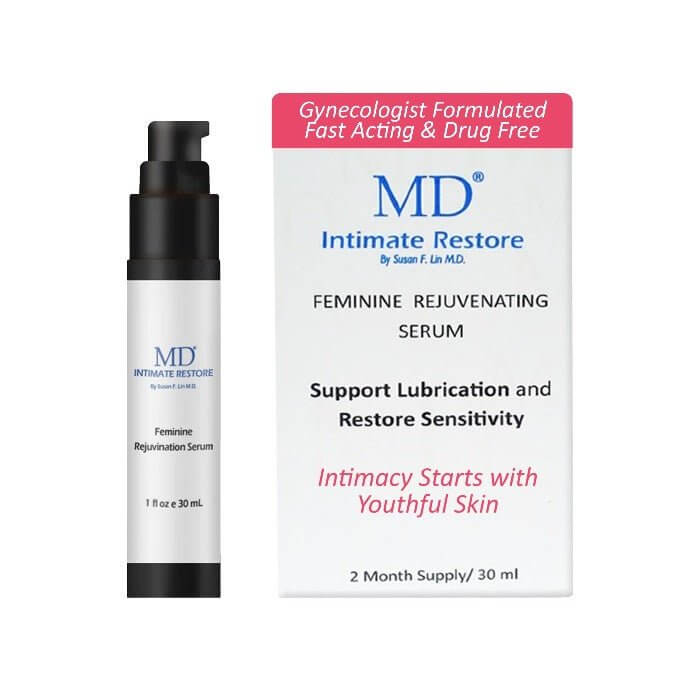
- MD Intimate Restore — supportive feminine rejuvenation
- Vulvovaginal Atrophy in Menopause
Scientific references
- American Cancer Society. Sexual side effects in women. cancer.org
- National Cancer Institute. Sexuality and reproductive issues. cancer.gov
- Portman DJ, Gass ML. Genitourinary syndrome of menopause. Maturitas. 2014;79(3):349-354. PMID 25213769
- American College of Obstetricians and Gynecologists. acog.org/womens-health
- The Menopause Society. menopause.org
Full citation index: MD Scientific References Hub.
Educational only; not a substitute for individualized medical advice. Cancer survivors should consult their oncologist before introducing any new cosmetic product. MD Intimate Fresh™ is a daily cosmetic intimate cleanser and is not intended to treat, cure, or prevent any disease.